The best personal growth book is the one that matches the thing you want to change and the way you like to read. For habits, that may be a practical manual. For self-acceptance, it may be a memoir or a work of psychology. For many readers, it is a story: a fantasy novel in which a character does the inner work you are trying to do. This guide covers all three routes, shows where the well-known titles fit, and explains how to get something lasting from whatever you pick up. It also introduces the books of Aurealia Nelson, who writes mythology-rich fantasy and witchcraft guides about self-acceptance and personal power.
TL;DR
- Choose by goal, not by bestseller rank: habits, self-compassion, emotional wellbeing, focus and relationships each have their own standout titles.
- Personal growth books focus on self-awareness and the attitudes behind your obstacles, while self-development books focus on actions, so decide which you need.
- Research on reading for wellbeing is encouraging, and the readers who benefit most treat a book as practice, not just reading.
- Fiction counts: mythology, witches and fantasy heroines let you rehearse self-acceptance through a character's journey.
- Pick a format you will finish, then pair every chapter with one small action.
Table of Contents
- What counts as a personal growth book
- The books readers return to, sorted by goal
- What the research says about reading for growth
- Why stories work as personal growth books
- Where Aurealia Nelson's books fit
- How to choose your book
- Getting more from what you read
- FAQ
- Sources
What counts as a personal growth book
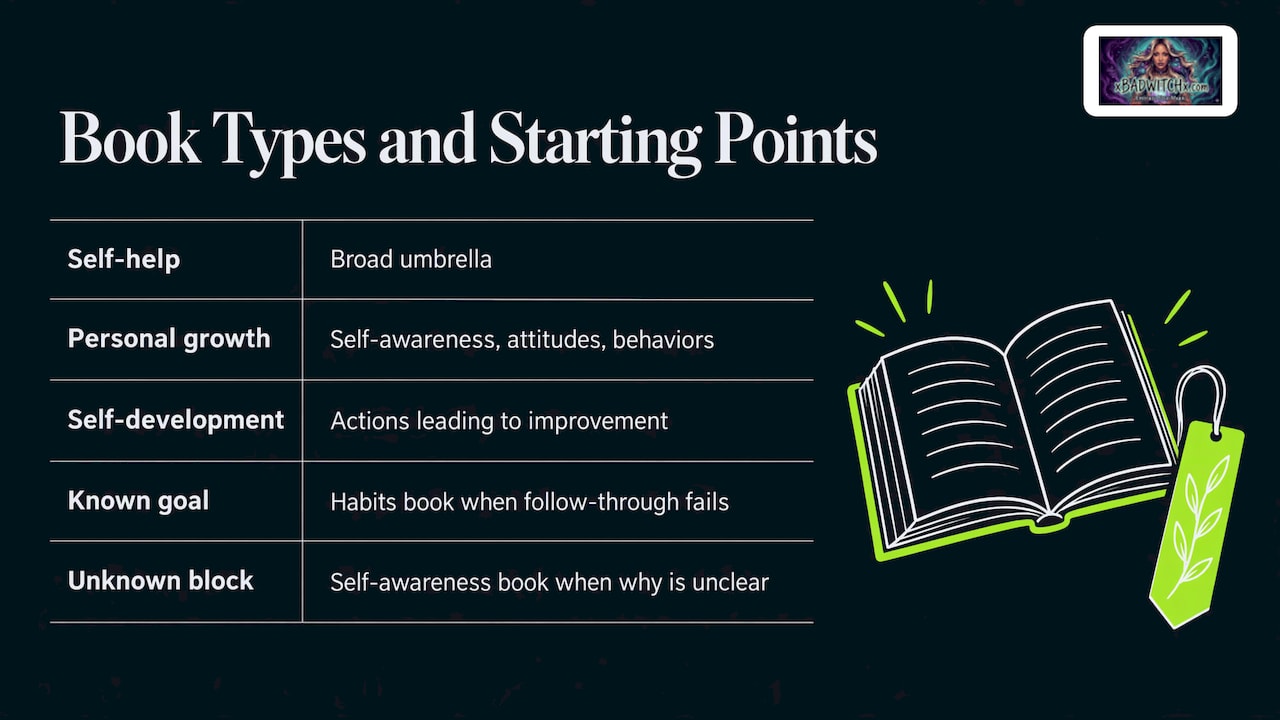
The labels blur in bookstores, but they point to different things. According to Forbes, self-help is the broad umbrella. Personal growth books concentrate on self-awareness and the attitudes and behaviors underneath your obstacles. Self-development books concentrate on the actions that lead to improvement. That difference helps you shop. If you already know what you want to do and keep failing to do it, you probably need a habits book. If you cannot say why you keep stalling, a book about self-awareness is the better start.
The genre is older than most people assume. The Atlantic traces it to 1859, when the Scottish journalist and doctor Samuel Smiles published Self-Help, an international bestseller that launched a cult of personal improvement. The same piece notes the category has grown into a roughly $10 billion industry. Where there is that much money, there is also a lot of recycled advice. SELF's editors describe the market as crowded with self-proclaimed gurus and empty promises, and say a great book instead nudges you toward small shifts that add up over time. That is a useful standard for judging any title, including the ones below.
The books readers return to, sorted by goal
A ranked top 10 tells you what sells. A list sorted by need tells you what to read. These are the titles that recur across mainstream recommendation lists, with what each one offers.
| Goal | Book | What it gives you |
|---|---|---|
| Building habits | Atomic Habits, James Clear | Small, consistent changes instead of instant transformation |
| Understanding habit loops | The Power of Habit, Charles Duhigg | Real-person stories plus research on why people fall into patterns |
| Shame and imperfection | The Gifts of Imperfection, Brené Brown | A way to work with vulnerability and shame |
| Courage and vulnerability | Daring Greatly, Brené Brown | An introduction to her research on courage and compassion |
| Self-criticism | Self-Compassion, Kristin Neff | The case for self-compassion over self-esteem |
| Relationships | Secure, Amir Levine | Attachment theory's four bonding styles |
| Focus | How to Focus, John Cassian, translated by Jamie Kreiner | Ancient guidance on distraction, for modern readers |
| Confidence and healing | Welcome Home, Najwa Zebian | Poetry and memoir in chapters that stand alone |
Habits and routines
Atomic Habits is the title that appears most often. SELF notes that James Clear has written about habits since 2012 and that the book makes change feel attainable for things like fitness routines, quitting smoking or small daily habits. Forbes ranks it first in its list of top self-help books and calls it best for anyone, really. If you want to understand why you slide back into patterns before you try to change them, SELF also highlights The Power of Habit, which mixes anecdotes with research and which a therapist quoted there says clients find easy to follow.
Self-acceptance and self-criticism
If your obstacle is an inner critic, the habit books will feel beside the point. The Gifts of Imperfection is on SELF's list for its handling of vulnerability and shame. The Atlantic recommends Daring Greatly as the essential introduction to Brown's work, grounded in her social-work PhD and original research. Forbes includes Kristin Neff's Self-Compassion, which argues that self-compassion, not self-esteem, is what carries people through emotional struggle.
Relationships and focus
The Guardian's January 2026 roundup of expert picks includes Amir Levine's Secure, built on attachment theory. The psychotherapist who chose it, Philippa Perry, adds a warning that applies to every book here: reading alone is not enough, because you have to do the work and then keep up the practice. The same feature features How to Focus, a fourth-century monk's advice in a modern translation. Oliver Burkeman, who picked it, advises accepting distraction as permanent, choosing focus targets that interest you instead of punishing yourself, and forgiving lapses.
Confidence, in short chapters
If you read in bursts, a book you can dip into helps. Hyphen's 2026 review of Najwa Zebian's Welcome Home describes a blend of poetry and memoir with self-contained chapters, and calls it a good fit for readers short on confidence or struggling with difficult relationships.
What the research says about reading for growth
Readers often ask whether any of this works. The evidence is encouraging, with some useful detail about who gains most.
In a 2007 paper in the Journal of Happiness Studies, Ad Bergsma analyzed 57 bestselling psychology books and found that their main aim is to strengthen personal strengths and functioning, not to treat disorders. Common themes were personal growth, relationships, coping with stress and identity. The same paper reports that 85% of psychotherapists recommend self-help books to clients, and that it cites a 1997 meta-analysis finding bibliotherapy (the use of reading as a form of support) no less effective than individual or group therapy for unipolar depression. It also finds that self-help works best for readers who are highly motivated and resourceful. In other words, your engagement matters as much as the title.
A 2021 systematic review in Frontiers in Public Health looked at 13 studies and found that bibliotherapy helped readers re-signify their activities through a new moral outlook. Four studies indicated it may support self-concept and an internal locus of control, meaning a sense that your actions shape your life. The reviewers also found that values such as autonomy and justice were closely tied to good outcomes. The takeaway for you: the books that help most tend to offer a way of seeing yourself and your choices differently, not only a list of tips.
If you are dealing with depression, anxiety or trauma, talk to your doctor or a licensed therapist as well. A book is a good companion to professional care, and a therapist can help you choose one.
Why stories work as personal growth books
Not everyone grows through a framework with numbered steps. Some people recognize themselves faster in a character. The Atlantic's Eleanor Cummins argues that the best self-help works like a trusted friend, a well-trained therapist or an armchair philosopher, connecting a lone reader to shared human experience. Fiction does this by showing, not telling.
Fantasy is especially good at it because it externalizes inner states. A curse can stand in for shame. A hidden power can stand in for a self you were taught to hide. Book Riot's description of feminist fantasy for younger readers names the pattern: characters stand up for themselves, find their places and change their societies, and magic alone is not enough, because they also have to be kind, courageous and willing to rely on others. Adults can read the same arc at a deeper level.
Mythology adds another layer. Old stories about goddesses, witches, tricksters and underworld journeys have been carrying human questions about power, loss and return for centuries. The Guardian's feature on How to Focus shows the same appetite: a series called Ancient Wisdom for Modern Readers is bringing old texts to people who want practical guidance. Readers who like mythology and psychology together are looking for exactly this kind of crossover.
Where Aurealia Nelson's books fit
Aurealia Nelson writes at that crossover. Her books combine speculative and genre storytelling with mythology, philosophy, psychology and witchcraft, and they return again and again to self-acceptance and personal power. Her catalog spans fantasy and paranormal fiction, witchcraft and herbal practice guides, cultural history and personal empowerment.
Two titles show the range:
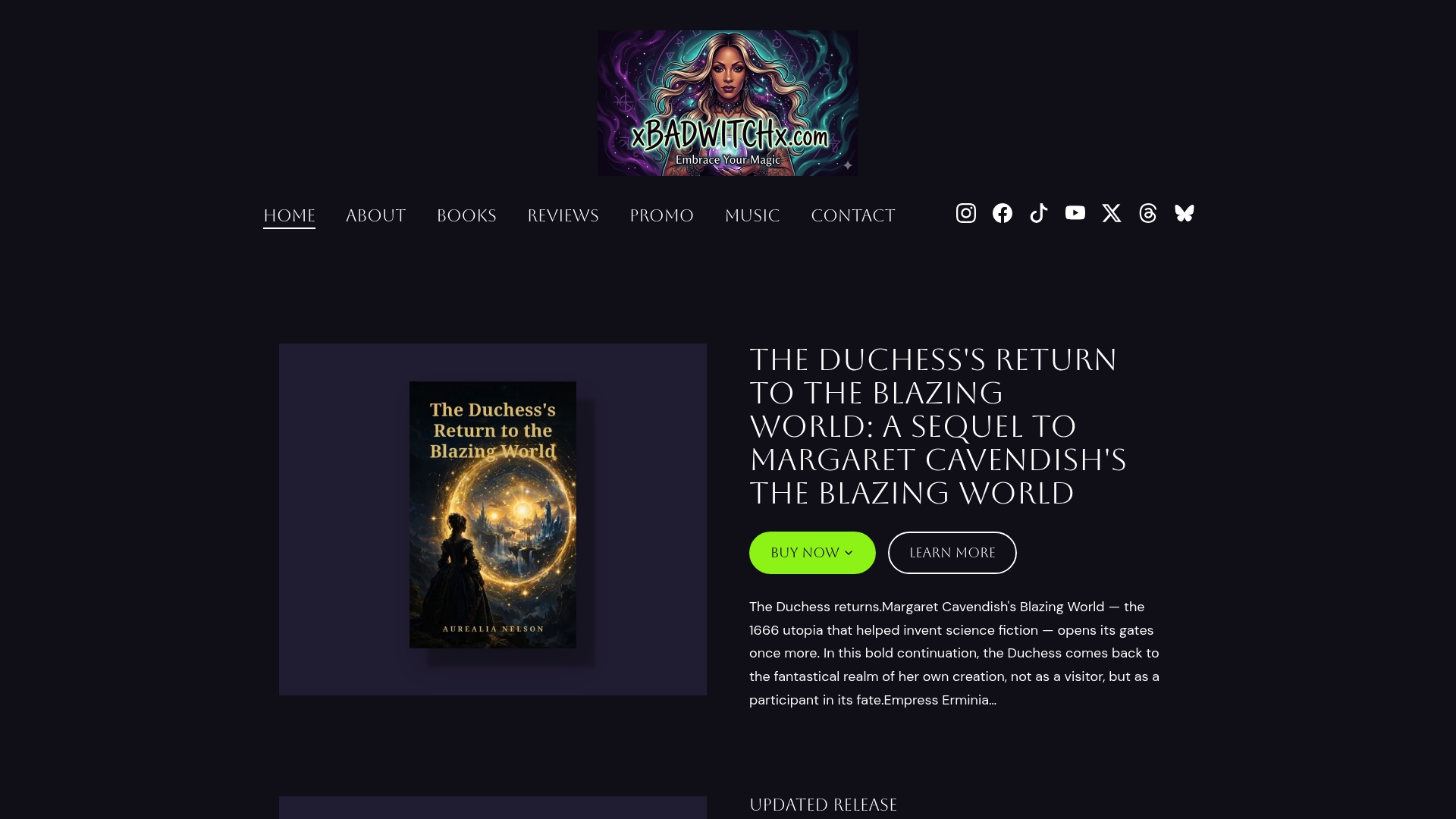
- The Duchess's Return to the Blazing World is fiction about power dynamics in varied settings, for readers who want empowerment inside a story.
- How to Be a Bad Witch takes on self-acceptance and breaking from societal norms, for readers who want to step out of what is expected of them.
If you came to this topic through fantasy, or you find that a mythic frame makes inner work feel less clinical, you can browse all of her titles on the books page. Her work draws on mythological and psychological frameworks, so each book is meant to give you a story and a set of tools for personal transformation together.
Aurealia also gives author talks and events on these themes. If you run a book club, a library program, a community group or a festival, you can find out more about booking an author talk.
How to choose your book
Use these five questions in order. They take about ten minutes, and they save you from buying the most popular book instead of the right one.
- Name the problem in one sentence. Do not write 'be better.' Write 'I start strong and quit in week two,' or 'I replay every mistake for days.' The first points to a habits book, the second to a self-compassion book.
- Decide between insight and action. Using Forbes's distinction, personal growth books work on awareness and attitudes, while self-development books work on actions. Many readers need one and then the other.
- Look for practice, not slogans. A good book gives you something to do, whether that is an exercise, a ritual, a reflection prompt or a character to emulate. Perry's point from the Guardian applies: the value arrives when you do the work and keep going.
- Match the format to your reading life. A book you finish beats a better book you abandon. Short chapters suit busy weeks. A novel suits readers who stall on nonfiction. A practice guide suits readers who like to try things.
- Choose a voice you trust. SELF's picture of a great book is one that nudges you toward small, gradual shifts. If a title promises to change your whole life overnight, put it back.
Getting more from what you read
The research above points to engagement as the deciding factor, so build a few habits around the reading itself.
Read slowly, one idea at a time. After each chapter, write down one sentence about what applies to you. If nothing does, move on.
Turn one idea into one action within 48 hours. For a habits book, that might be a single two-minute habit. For a self-compassion book, it might be speaking to yourself the way you would speak to a friend after one specific mistake. For a story, it might be asking what the character did at the turning point and where you face a similar choice.
Forgive lapses. Burkeman's advice on focus generalizes: expect to drift, and treat returning as the skill. Self-criticism for missing a day undoes the point of the book.
Read with someone. Discussion makes ideas stick. A book club that reads one empowerment novel or one practice guide per month gives you accountability and new angles.
Reread what worked. Many readers get more from a second pass through a short book than from a first pass through a new one.
FAQ
What are the best personal growth books to start with?
For habits, start with Atomic Habits. For shame and perfectionism, try The Gifts of Imperfection. For a harsh inner critic, try Self-Compassion. If you want growth through story, Aurealia Nelson's How to Be a Bad Witch and The Duchess's Return to the Blazing World pair mythology and psychology with themes of self-acceptance and power.
What is the difference between personal growth and self-help books?
Self-help is the umbrella term for the whole genre. According to Forbes, personal growth books focus on self-awareness and the attitudes and behaviors behind your obstacles, while self-development books focus on the actions that produce improvement. Most readers benefit from a mix of both.
Do personal growth books actually work?
Research is encouraging. A 2021 review of 13 studies found bibliotherapy helped readers develop new ways of seeing their activities, and Bergsma's 2007 paper reports high rates of therapist recommendation. Results are strongest when you treat a book as a practice and take action on it. For depression or anxiety, combine reading with care from a doctor or therapist.
Can fiction count as a personal growth book?
Yes. Stories let you try on courage, boundaries and self-acceptance through a character before you attempt them yourself. Fantasy and mythology are especially suited to this, because magic and myth give shape to feelings that are hard to name directly.
How many books should I read at once?
One at a time works best for most people, because the point is applying ideas, not collecting them. Pair a practical title with a story if you like variety, and give each a different time of day.
Sources
- Eight Self-Help Books That Actually Help, The Atlantic
- 13 of the Best Self-Help Books, SELF
- The 25 Top Self-Help Books For Personal Growth, Forbes
- Experts pick the self-help books that really work, The Guardian
- The best self-help books to guide you through 2026, Hyphen
- Do self-help books help? Journal of Happiness Studies
- Bibliotherapy as a Non-pharmaceutical Intervention, Frontiers in Public Health
- Middle Grade Feminist Fantasy Books, Book Riot